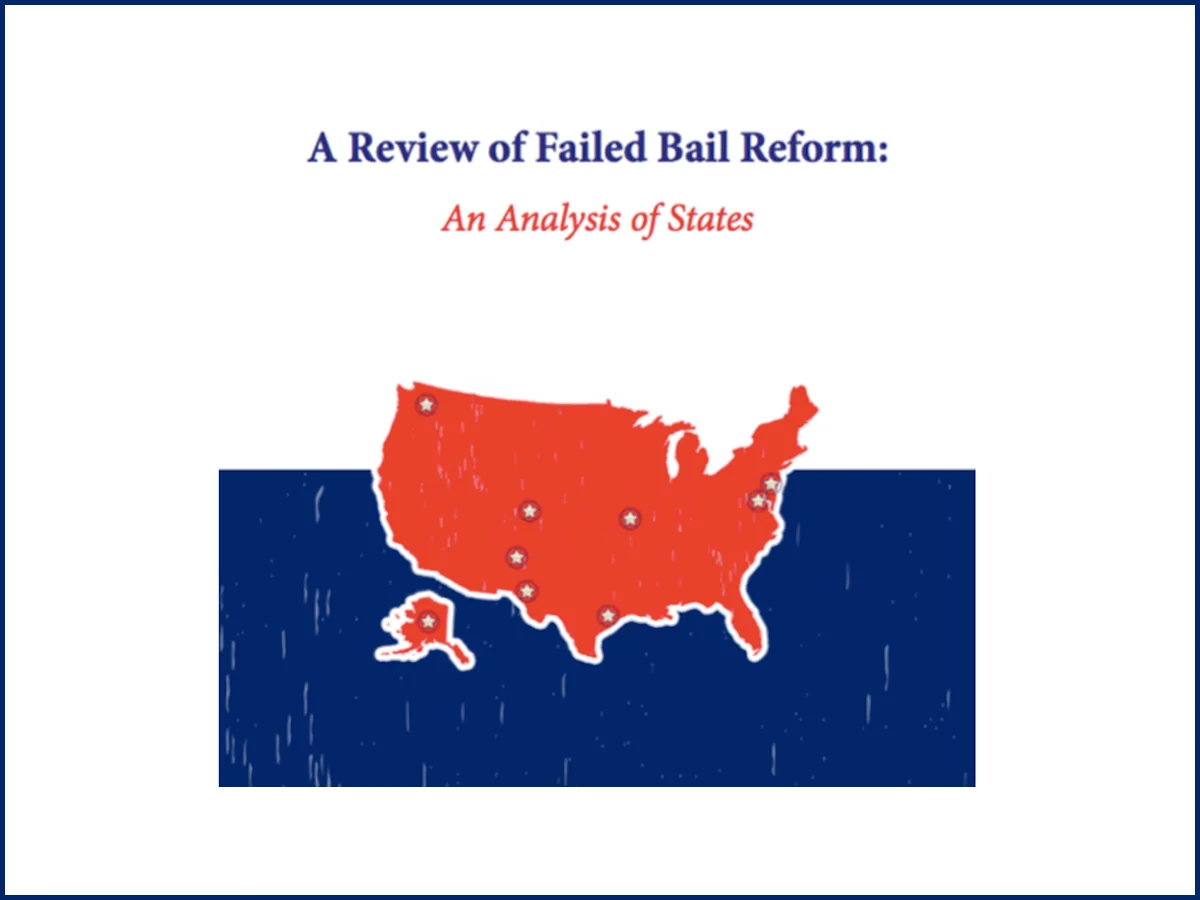
Across the United States, sweeping changes to the cash bail system were promised as a path toward fairness, equity, and reduced jail populations, yet a growing body of evidence shows that bail reform has failed to deliver on those promises in state after state. From New York to Illinois to California, communities are experiencing rising crime, higher failure-to-appear rates, and overwhelmed court systems that were never prepared to absorb the consequences of eliminating cash bail. What was sold as a compassionate overhaul has instead exposed the public to repeat offenders, weakened accountability in the pretrial process, and forced lawmakers to roll back their own reforms. This review examines how failed bail reform policies have played out across multiple states, why cash bail remains one of the most effective tools for ensuring court appearances, and what Las Vegas residents should understand about the difference between Nevada’s proven bail system and the failed experiments happening elsewhere. For anyone who values public safety, personal responsibility, and a justice system that actually works, the lessons from these failed bail reform efforts are impossible to ignore.
Blog Post Summary
- Why bail reform was introduced and what its supporters originally claimed it would accomplish
- How New York’s bail reform failed and triggered multiple legislative rollbacks
- Why Illinois became a cautionary tale after eliminating cash bail entirely
- What California, New Jersey, Alaska, and New Mexico reveal about failed bail reform outcomes
- The measurable public safety consequences of eliminating cash bail
- How failed bail reform has harmed the very communities it claimed to help
- Why Nevada’s traditional bail system continues to protect Las Vegas residents
- Frequently asked questions about bail, bail reform, and pretrial release
- Key takeaways for voters, policymakers, and anyone navigating the bail process
Why Bail Reform Was Introduced
Before examining why bail reform has failed, it helps to understand what reformers originally argued. Advocates claimed the cash bail system unfairly detained low-income defendants, contributed to jail overcrowding, and produced racial disparities in pretrial detention. Their proposed solution was to eliminate or severely restrict cash bail for most offenses, replacing it with risk assessment tools, supervised release programs, and automatic release for many charges. On paper, the concept sounded humane. In practice, the execution has been a disaster, and the data from states that adopted these policies shows exactly why traditional bail continues to serve the public interest far better than any alternative yet devised.
New York: The Poster Child for Failed Bail Reform
New York’s 2019 bail reform law, which took effect in January 2020, is perhaps the most widely cited example of failed bail reform in the country. The law eliminated cash bail for nearly all misdemeanors and many nonviolent felonies, forcing judges to release defendants regardless of their criminal history or apparent risk to the community.
Immediate Consequences
Within months of implementation, New York City and other parts of the state saw a wave of repeat offenses committed by individuals who would previously have remained in custody. Police officials, prosecutors, and even Democratic lawmakers began publicly criticizing the reforms as crime categories surged. Retail theft, assault, and gun-related offenses climbed, and high-profile incidents involving defendants released under the new rules dominated local headlines.
Multiple Rollbacks
The New York legislature was forced to amend its own bail reform law in 2020, 2022, 2023, and again in subsequent sessions. Each rollback restored judicial discretion for additional categories of offenses, a tacit admission that the original bail reform had failed. Even after these amendments, critics argue that the law continues to prioritize the release of defendants over the protection of victims and communities.
Illinois: The First State to Fully Eliminate Cash Bail
Illinois made history in September 2023 when the Pretrial Fairness Act, part of the broader SAFE-T Act, made it the first state in the nation to completely abolish cash bail. Supporters hailed the change as a civil rights milestone. The reality has been considerably less celebratory.
Court System Overload
Illinois judges now conduct detention hearings for nearly every arrest, creating enormous backlogs in already strained courts. Prosecutors report that the burden of proof required to detain dangerous defendants is so high that individuals accused of serious crimes are routinely released within hours of arrest.
Public Safety Concerns
Chicago-area law enforcement and suburban police departments have documented cases in which defendants released under the new system committed additional crimes, including violent offenses, before their original cases were resolved. The political fallout has been significant, and Illinois is frequently held up as evidence that failed bail reform produces exactly the outcomes its critics predicted.
California: Voters Rejected Bail Reform Outright
California offers a revealing lesson in what happens when voters themselves weigh in on bail reform. In 2020, Proposition 25 asked Californians whether to replace cash bail with an algorithmic risk assessment system. Despite heavy support from progressive organizations, the measure failed decisively, with voters rejecting it by a wide margin.
The Humphrey Decision
California courts have since imposed partial reforms through judicial decisions, most notably the Humphrey ruling, which requires judges to consider a defendant’s ability to pay. The result has been inconsistent application, confusion among judges, and growing frustration among prosecutors who argue that genuinely dangerous defendants are slipping through the cracks.
Rising Concerns
San Francisco, Los Angeles, and Oakland have all experienced high-profile cases involving repeat offenders released under these partial reforms, feeding a broader public perception that California’s experiment with weakening cash bail has failed to improve either fairness or safety.
New Jersey: Held Up as a Model, But Not Without Problems
New Jersey’s 2017 bail reform is often cited as more successful than others because the state invested heavily in pretrial services and risk assessment infrastructure. Even so, New Jersey’s system has faced serious criticism.
Algorithmic Risk Assessment Flaws
The risk assessment tools used in New Jersey have been challenged for producing inconsistent results and for potentially replicating the very biases reformers sought to eliminate. Defendants flagged as low risk have gone on to commit serious offenses, while others have been detained based on algorithmic scores that judges and attorneys struggle to interpret or contest.
Cost to Taxpayers
New Jersey’s pretrial services program costs taxpayers tens of millions of dollars annually, a burden that did not exist under the traditional cash bail system, where bail bonds companies provided equivalent accountability at no public cost.
Alaska and New Mexico: Smaller States, Same Failed Bail Reform Pattern
Alaska passed Senate Bill 91 in 2016, overhauling its criminal justice system including bail provisions. Within two years, Alaskan lawmakers repealed major portions of the law after the state experienced sharp increases in property crime and drug-related offenses. The rollback was bipartisan and reflected a broad consensus that the reforms had failed.
New Mexico amended its constitution in 2016 to restrict cash bail, and the state has since grappled with elevated failure-to-appear rates and persistent public safety concerns, particularly in Albuquerque. Both states demonstrate that the problems associated with failed bail reform are not limited to large urban centers.
The Measurable Costs of Failed Bail Reform
When researchers compare states that maintained traditional cash bail to those that implemented aggressive bail reform, several patterns emerge.
Failure-to-Appear Rates
Cash bail, particularly when a licensed bail bondsman is involved, consistently produces the lowest failure-to-appear rates in the country. Defendants released on their own recognizance or through supervised release programs are significantly more likely to miss court dates, wasting taxpayer resources and delaying justice for victims.
Recidivism and Repeat Offenses
States with failed bail reform laws have documented increases in pretrial rearrests, including for violent crimes. When defendants have no financial stake in their release, the incentive to comply with court conditions diminishes, and repeat offending becomes more common.
Victim Impact
Perhaps the most overlooked cost of failed bail reform is the impact on crime victims. Victims who watch their attackers released within hours of arrest often lose faith in the justice system entirely, and many decline to cooperate with prosecutors as a result.
How Failed Bail Reform Has Harmed the Communities It Promised to Help
One of the most ironic consequences of failed bail reform is that the communities reformers claimed to protect have often been harmed the most. Low-income neighborhoods with higher crime rates have experienced the greatest surges in repeat offenses, meaning that residents who already faced disproportionate exposure to crime now face even more. The businesses, families, and working-class residents in these areas have been forced to absorb the costs of failed policies that were designed by advocates who do not live with the consequences.
Why Nevada’s Traditional Bail System Continues to Work
Nevada has wisely resisted the wave of failed bail reform policies sweeping other states. In Las Vegas and throughout Clark County, the traditional bail system continues to function exactly as intended, holding defendants accountable while giving them a fair opportunity to return home, prepare their defense, and maintain their employment and family responsibilities. Licensed bail bonds companies such as eBAIL provide a critical service by guaranteeing court appearances, reducing the burden on taxpayers, and ensuring that the criminal justice system actually functions. Nevada residents benefit from a system where judges retain discretion, where defendants have real incentives to comply with court orders, and where licensed bail professionals serve as an accountability mechanism that no government program has ever been able to replicate.
Frequently Asked Questions About Bail and Bail Reform
What is bail reform?
Bail reform refers to legislative or judicial efforts to eliminate or restrict the use of cash bail in the pretrial process. Proponents argue that cash bail is unfair to low-income defendants, while opponents point to the evidence that such reforms have failed to improve public safety or court appearance rates.
Why has bail reform failed in so many states?
Bail reform has failed primarily because it removed financial accountability from the pretrial process without providing an equivalent replacement. Without a financial incentive to appear in court, failure-to-appear rates rise, and without the oversight provided by licensed bail agents, communities lose a critical layer of accountability.
Does cash bail discriminate against low-income defendants?
This claim, while frequently repeated, is often overstated. Licensed bail bonds companies make pretrial release affordable for defendants across income levels by charging a small percentage of the full bail amount. Most defendants who cannot afford a bondsman’s fee are facing serious charges where judicial discretion remains appropriate.
What happens in states that have not adopted bail reform?
States such as Nevada, which have maintained traditional bail systems, continue to enjoy lower failure-to-appear rates, stronger accountability, and a more predictable pretrial process. These states have also been spared the legislative chaos of repeated rollbacks that have defined failed bail reform efforts elsewhere.
How does a bail bond work in Las Vegas?
In Las Vegas, when a judge sets bail, the defendant or their family can contact a licensed bail bonds company such as eBAIL to post the bail on their behalf. The bondsman charges a standard fee, typically a percentage of the total bail amount, and guarantees the defendant’s appearance in court.
Is bail reform likely to come to Nevada?
Nevada lawmakers have so far resisted the kind of sweeping bail reform that has failed in other states. Given the well-documented failures of bail reform elsewhere, it is unlikely that Nevada voters or legislators will move in that direction anytime soon.
Why do bail bonds companies oppose bail reform?
Licensed bail bonds companies oppose bail reform because they see firsthand how the traditional bail system protects victims, ensures court appearances, and holds defendants accountable. Failed bail reform has demonstrated that government-run alternatives cannot match the effectiveness of a private, licensed, and regulated bail industry.
Key Takeaways
- Bail reform has failed in state after state, producing higher crime, more missed court dates, and repeated legislative rollbacks
- New York, Illinois, California, New Jersey, Alaska, and New Mexico all provide clear evidence that failed bail reform harms public safety
- Cash bail, particularly when administered through licensed bail bonds companies, remains the most effective tool for ensuring court appearances
- Failed bail reform has disproportionately harmed the low-income communities that reformers claimed to protect
- Risk assessment algorithms have proven unreliable, expensive, and in some cases biased
- Nevada’s traditional bail system continues to protect Las Vegas residents and deliver reliable outcomes
- Licensed bail bonds companies such as eBAIL provide accountability that government-run pretrial programs cannot match
- Voters who value public safety should remain cautious of any proposal to import failed bail reform policies into Nevada
- The lessons from failed bail reform are clear: accountability works, and cash bail continues to serve the public interest
Please click on the image or the following link to open the PDF learn more about failed bail reform in the United States of America.
A Review of Failed Bail Reform: An Analysis of States
(702)-462-9200
Cheap Bail Online Now!
Contact eBAIL Cheap Bail Bonds Las Vegas
eBAIL Cheap Bail Bonds
(702)-462-9200
Marc Gabriel
3100 E Charleston Blvd Suite 108, Las Vegas, NV 89104
Continue to our Contact Us page for more information about our location. Also see us on Google Maps. If you would like to see our reviews please visit our Bail Bonds Las Vegas Reviews pages.